Dumper Machine Mistakes & How to Avoid Tip-Overs on Construction Sites
Discover the most critical site dumper operating mistakes, why dynamic tip-overs happen on slopes, and practical engineering protocols to protect operators and payloads.
Discover the most critical site dumper operating mistakes, why dynamic tip-overs happen on slopes, and practical engineering protocols to protect operators and payloads.
The High Cost of Site Dumper Miscalculations
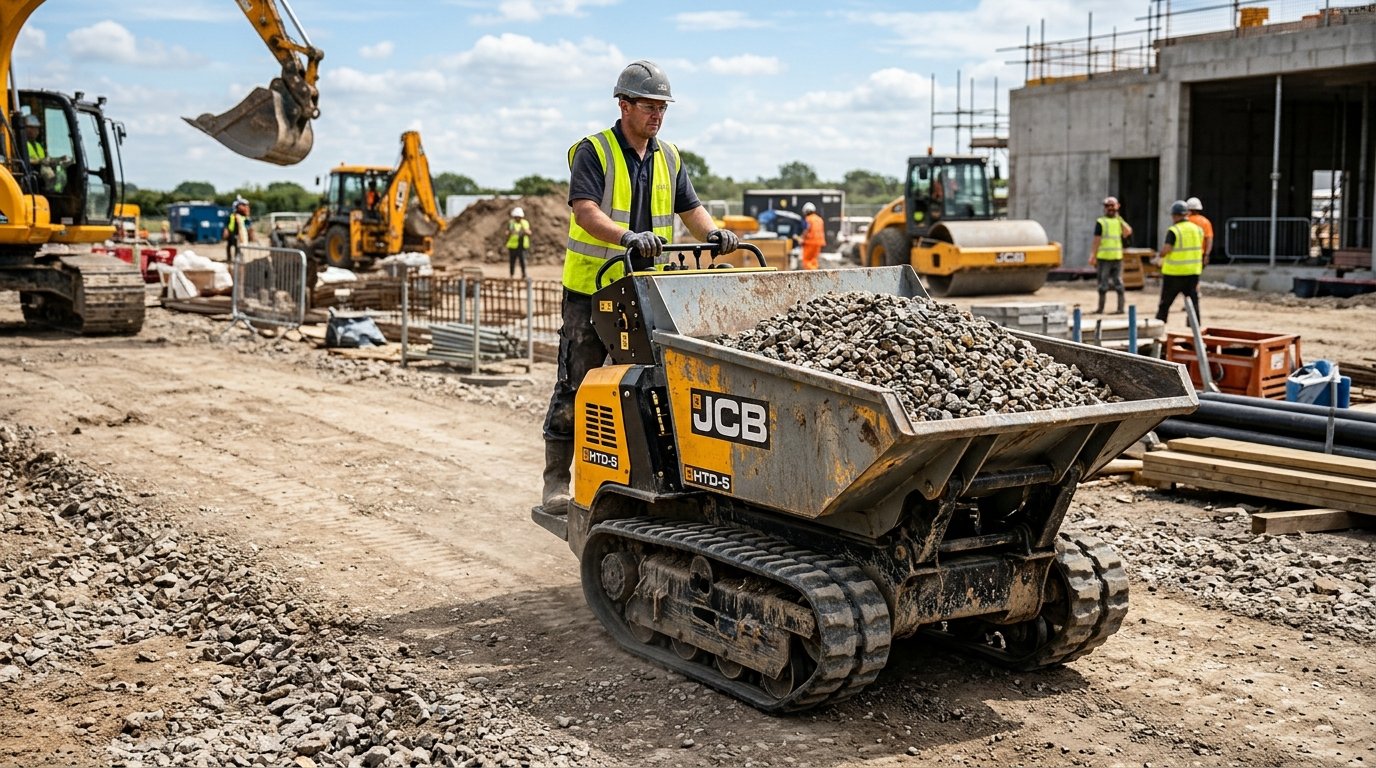
Compact site dumpers and tracked carriers are among the most versatile workhorses on civil earthmoving, utility, and landscaping jobsites. However, safety incident statistics consistently rank site dumpers among the most vulnerable equipment classes for rollover fatalities and lost-time accidents.
According to construction safety audits, over 65% of dumper tip-overs stem directly from preventable operator errors—principally travelling with raised skips, turning across steep inclines, and misjudging ground-bearing capacity under dynamic wheel loads.
When a 3-ton to 9-ton payload machine shifts its center of gravity while traversing uncompacted ground, the transition from controlled movement to an irreversible rollover occurs in less than 1.2 seconds. This guide examines the fundamental mechanics behind dumper stability, highlights the most lethal operational mistakes, and establishes proactive fleet safety procedures.
Common Dumper Operating Mistakes
1. Driving with an Elevated or Swiveled Skip By far the most catastrophic error is initiating machine travel while the hydraulic skip is still elevated or swiveled off-center. Elevating the skip shifts the machine's combined center of gravity (CoG) significantly upward and outside the wheel or track stability polygon. Even at creep speeds under 2 mph, hitting an 8-inch depression or rock while elevated will immediately induce a sideways rollover.
2. Traversing Slopes Across the Gradient (Side-Hilling) Dumpers are designed to climb and descend steep slopes directly straight up and straight down. Operators frequently make the mistake of attempting diagonal turns or driving across the face of a gradient. When loaded, a cross-slope angle exceeding 10 to 12 degrees creates massive lateral weight transfer to the downhill tires or tracks, resulting in immediate tip-over.
3. Overloading and Forward Weight Bias Exceeding the rated payload or placing wet cohesive clay entirely in the forward lip of the bucket severely reduces rear axle ground contact. When descending ramps, this forward bias causes the rear steering wheels to lift completely off the ground, causing loss of steering and catastrophic runaway incidents.
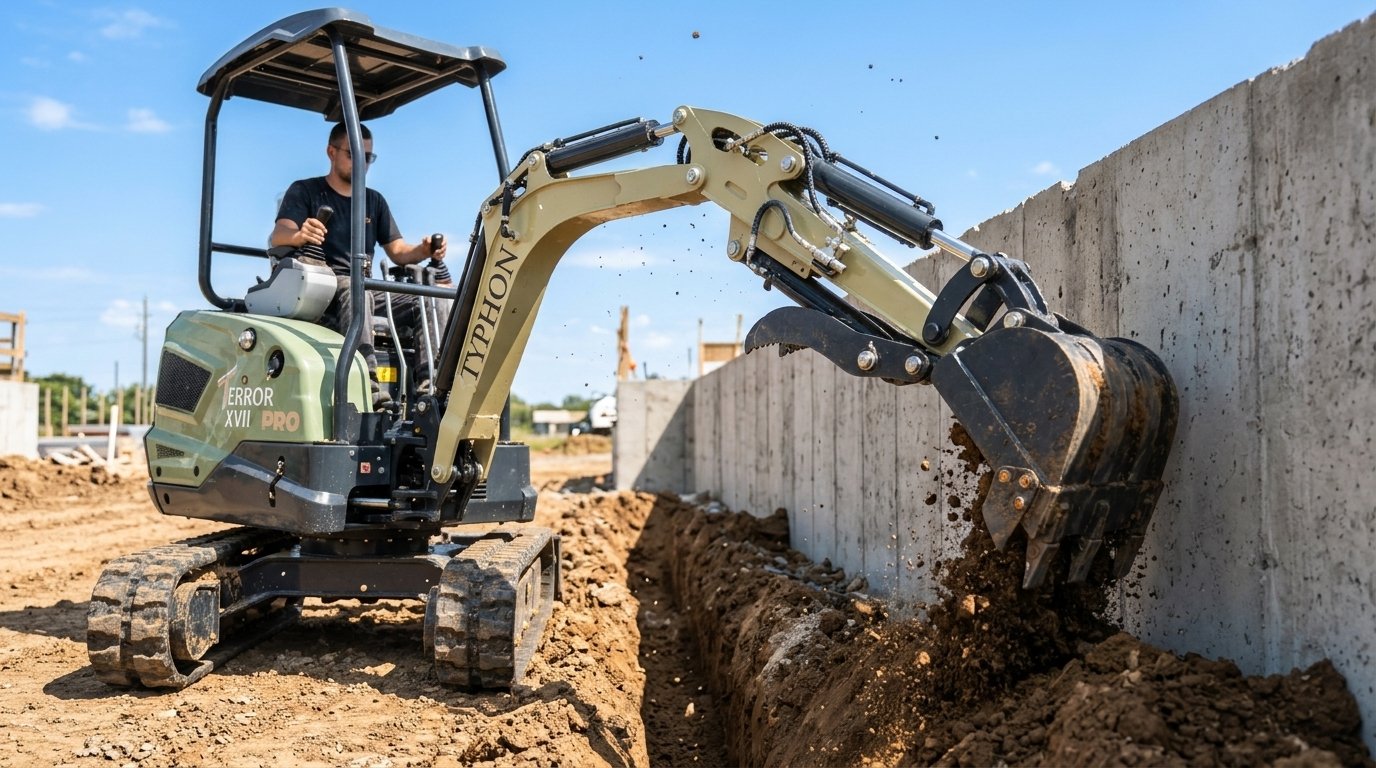
4. Ignoring Soft Edges and Backfilled Trench Margins Dumping aggregate or spoils into an open trench without maintaining a mandatory buffer zone causes the trench wall to shear under the dumper's high ground contact pressure. Always maintain a minimum standoff distance equal to the trench depth, or utilize engineered stop blocks.
Technical Specifications: Dumper Stability Matrix
| Parameter / Model Class | 1.0 - 1.5 Ton Micro Dumper | 3.0 - 4.5 Ton Swivel Dumper | 6.0 - 9.0 Ton Forward Tip Dumper |
|---|---|---|---|
| **Max Safe Straight Gradient (Loaded)** | 15° (27% Grade) | 20° (36% Grade) | 22° (40% Grade) |
| **Max Safe Cross-Slope (Unloaded)** | 8° (14% Grade) | 10° (18% Grade) | 12° (21% Grade) |
| **Ground Bearing Pressure (Wheeled)** | 28 - 36 PSI | 38 - 48 PSI | 45 - 58 PSI |
| **Ground Bearing Pressure (Rubber Track)** | 4.2 - 6.5 PSI | 5.5 - 7.8 PSI | 6.8 - 9.2 PSI |
| **Recommended Trench Standoff Margin** | Min 3.0 ft (0.9 m) | Min 5.0 ft (1.5 m) | Min 6.5 ft (2.0 m) |
Pre-Shift Dumper Inspection Checklist
Before turning the ignition key, operators must conduct a systematic 5-minute circle-check:
Frequently Asked Questions
Q: Why do dumpers tip over more frequently than dump trucks? A: Site dumpers have a shorter wheelbase, higher center-of-gravity relative to their track width, and articulated steering that alters the stability triangle during turns. Dump trucks possess rigid frames and wider wheel tracks that provide superior torsional stability on uneven ground.
Q: Should a dumper travel reverse or forward when descending a steep hill loaded? A: When fully loaded, a dumper must ALWAYS travel in reverse down a steep slope so the heavy payload remains uphill, pressing the driving axle firmly into the ground. Never travel forward downhill with a full payload.
Q: Can rubber tracks prevent all rollover risks on mud? A: No. While rubber tracks reduce ground pressure to under 7 PSI and prevent bogging, wet slick clay severely reduces track grip. A machine can slide sideways on a 15-degree mud slope regardless of whether it is tracked or wheeled.
Explore TYPHON PROPACT Mini Excavators & Skid Steers
Compare engine horsepower, hydraulic breakout forces, and operating weights across TERROR XVII PRO Cabin, TERROR III, IV, and STOMP 65 loaders.
More Equipment Guides