Essential Skid Steer Safety Features: ROPS/FOPS, Interlocks & Blind-Spot Mitigation
A deep dive into skid steer life-safety systems: ISO ROPS/FOPS structural integrity, mechanical boom lock struts, seat interlocks, and 360-degree blind-spot cameras.
A deep dive into skid steer life-safety systems: ISO ROPS/FOPS structural integrity, mechanical boom lock struts, seat interlocks, and 360-degree blind-spot cameras.
The Unique Ergonomic Hazards of Compact Loaders
Skid steer loaders and compact track loaders (CTL) are among the most versatile, compact machines on modern civil jobsites. However, their unique mechanical configuration creates inherent physical safety hazards.
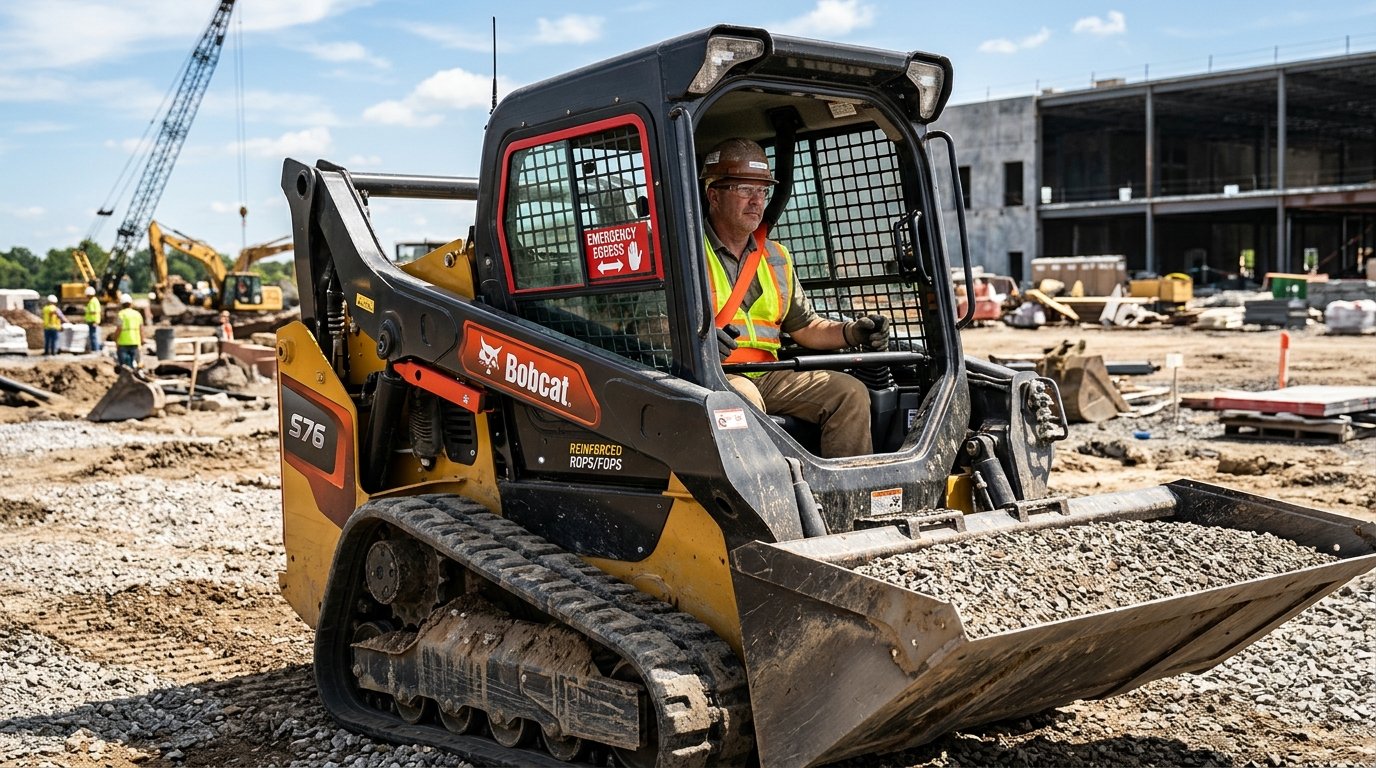
Unlike agricultural tractors or wheel loaders where the operator sits forward or high above the loader arms, a skid steer operator sits **directly between two massive hydraulic lift arms that scissor past the cab windows**.
Furthermore, the rear engine compartment severely restricts rearward visibility, while high-side loader towers create wide blind spots.
To eliminate these historic hazards, modern heavy equipment manufacturers have integrated a redundant matrix of active and passive life-safety systems. Understanding and maintaining these systems is mandatory for jobsite safety compliance.
Structural Protective Frameworks: ROPS & FOPS
Every commercial skid steer chassis must meet rigid international structural crashworthiness standards:
1. ROPS (Roll-Over Protective Structures - ISO 3471 / OSHA 1926.1000) The heavy welded steel cab cage is engineered to absorb massive kinetic energy during a machine rollover without deforming into the operator's survival zone. - A certified ROPS structure can support more than **double the gross operating weight** of the machine during an inverted drop. - **Crucial Rule:** Never drill holes, weld attachments, or modify a ROPS cage. Any field welding or structural modification permanently voids its OSHA certification.
2. FOPS (Falling Object Protective Structures - ISO 3449 Level I & II) Protects the operator from falling bricks, rock slabs, or falling debris when working under demolition rubble or high quarry walls. - Level I certification protects against falling hand tools and light branches. - Level II certification withstands severe impacts exceeding 11,600 Joules of energy (e.g., heavy concrete chunks falling from demolition heights).
Operator Presence Sensing Systems (Interlocks)
Modern skid steers utilize a triple-redundant safety interlock network:
Technical Skid Steer Safety Feature Matrix
| Life-Safety System | Standard / Specification | Function / Protection Mechanism | Mandatory Inspection Interval |
|---|---|---|---|
| **ROPS / FOPS Steel Cab** | ISO 3471 / ISO 3449 | Prevents cab collapse during rollover or falling debris | Pre-shift structural weld inspection |
| **Mechanical Lift Arm Lockout Strut** | OSHA 1926.602 / SAE J38 | Secures elevated boom arms mechanically during servicing | Before entering under raised arms |
| **Seat & Lap Bar Interlocks** | ISO 10968 / SAE J1077 | Shuts off hydraulic and drive circuits when unseated | Daily functional operation test |
| **Rearview Radar / 360° Cameras** | ISO 16001 / OSHA Blind Spot | Detects ground workers in rear blind zones | Daily lens cleaning & sensor test |
| **Emergency Cab Egress (Rear Hatch)** | ISO 2867 / OSHA Escape | Allows escape when loader arms block the front door | Monthly latch and seal check |
Mechanical Lift Arm Lockout Struts
The most lethal maintenance mistake on any skid steer is working beneath elevated loader arms supported solely by hydraulic pressure:
Frequently Asked Questions
Q: Can an operator legally bypass a seat bar safety interlock switch? A: Absolutely NOT. Tampering with, bypassing, or jumping safety interlocks is a willful federal OSHA violation carrying severe corporate fines. Bypassed interlocks are responsible for dozens of crushing fatalities every year when operators lean out of the cab.
Q: How do operators escape if the hydraulic arms fall and trap the front door shut? A: All enclosed-cab skid steers feature an emergency secondary egress route. Typically, the rear cab glass is fitted with a quick-release pull cord or emergency kick-out ring, allowing the operator to exit out the back of the machine.
Q: Are backup cameras and radar sensors mandatory on construction sites? A: While OSHA standards mandate functional backup alarms, an increasing number of general contractors and commercial sites now strictly mandate functional wide-angle backup cameras or active ultrasonic radar proximity sensors to eliminate blind-spot pedestrian collisions.
Explore TYPHON PROPACT Mini Excavators & Skid Steers
Compare engine horsepower, hydraulic breakout forces, and operating weights across TERROR XVII PRO Cabin, TERROR III, IV, and STOMP 65 loaders.