What Happens When a Skid Steer Engine Is Too Small? Power Loss & Hydraulic Stall
Learn how an undersized diesel engine cripples skid steer hydraulic performance, stalls drive motors under load, and shortens machinery lifespan.
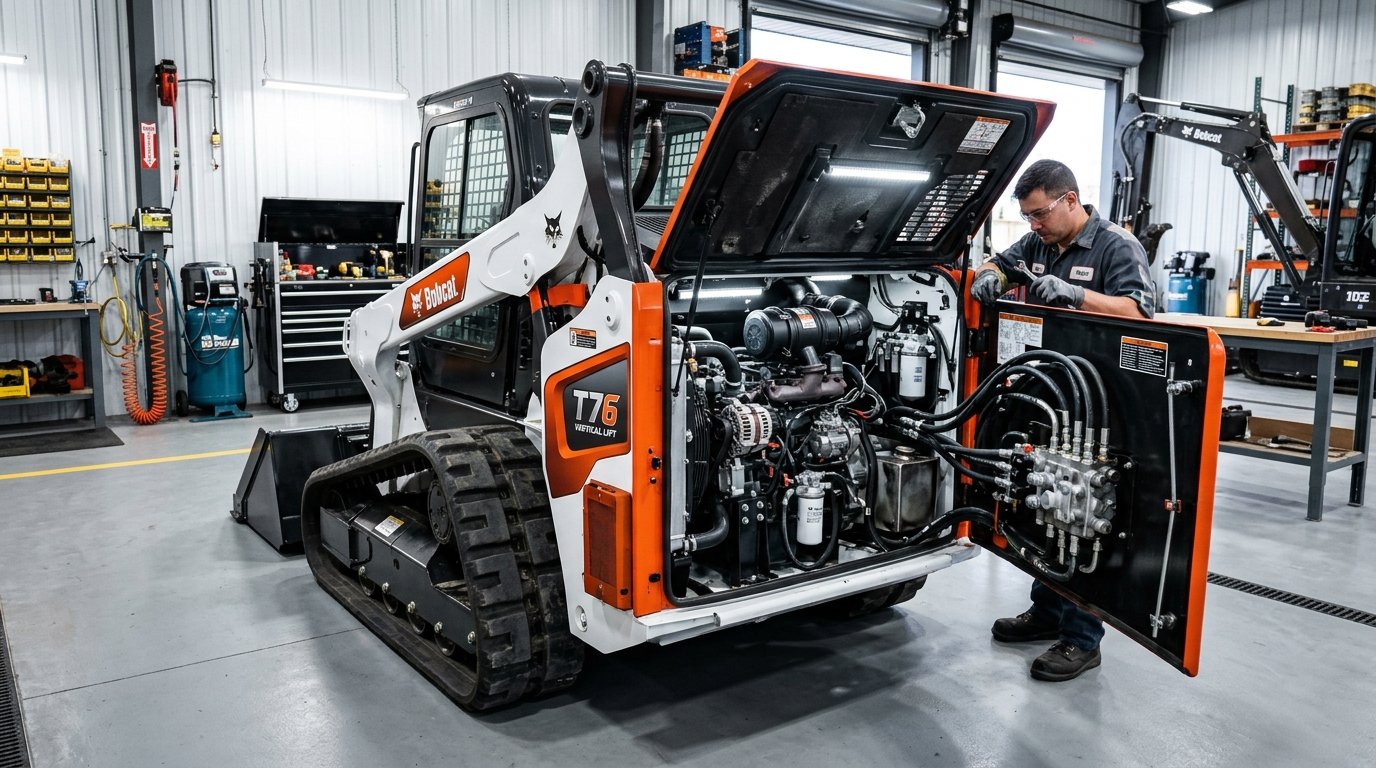
Learn how an undersized diesel engine cripples skid steer hydraulic performance, stalls drive motors under load, and shortens machinery lifespan.
The Engine-Hydraulic Relationship in Compact Loaders
In automotive engineering, an undersized engine merely causes sluggish acceleration. In a skid steer loader or compact track loader (CTL), however, an undersized engine creates widespread operational failure.
This occurs because a skid steer engine is not connected to a traditional mechanical transmission. Instead, 100% of the engine's mechanical brake horsepower is converted into hydraulic fluid power through a tandem hydrostatic drive pump and a separate gear or variable-displacement implement pump.
When you demand simultaneous travel and bucket curling—or operate continuous auxiliary attachments like a forestry mulcher, trencher, or cold planer—an undersized engine experiences catastrophic RPM droop. This directly collapses hydraulic flow, stalls the drive wheels, and induces severe thermal stress.
Warning Signs of an Undersized Skid Steer Engine
1. Chronic Hydraulic Bogging & Stall Under Digging Loads When penetrating a dense clay pile, the hydrostatic drive pumps ramp up system pressure toward 4,500 PSI to maintain tractive thrust. Simultaneously, the lift cylinder circuit demands 3,000+ PSI. If the engine lacks sufficient displacement and low-end torque reserve, the hydraulic pump governor pulls engine speed down past its torque peak, causing the diesel engine to bog down and stall out.
2. Collapsing Auxiliary Flow on High-Demand Attachments Hydraulic flow (GPM) is directly proportional to engine rotational speed (RPM). When a 45-HP engine bogs down from 2,600 RPM to 1,900 RPM under load, auxiliary hydraulic output drops by over 25%. A brush cutter or cold planer suddenly loses rotational momentum, gumming up with material and grinding to a dead halt.
3. Severe Engine and Hydraulic Fluid Overheating When an undersized engine runs continuously at 95% to 100% duty cycle to perform basic tasks, exhaust gas temperatures (EGT) skyrocket. To make matters worse, overloaded hydraulic circuits constantly pop their primary relief valves, converting wasted engine horsepower directly into intense heat that cooks hydraulic fluid and degrades seals.
Technical Engine Sizing & Attachment Demand Matrix
| Skid Steer HP Tier | Engine Displacement (L) | Auxiliary Flow (GPM @ PSI) | Rated Operating Capacity (ROC) | Compatible Attachments |
|---|---|---|---|---|
| **25 - 40 HP (Sub-Tier 4F)** | 1.1L - 1.7L Naturally Aspirated | 10 - 15 GPM @ 2,500 PSI | 700 - 1,350 lbs (317 - 612 kg) | Standard dirt buckets, light pallet forks, 36" augers |
| **50 - 65 HP (Mid-Range)** | 1.8L - 2.4L Turbocharged | 16 - 22 GPM @ 3,000 PSI | 1,500 - 2,200 lbs (680 - 998 kg) | Heavy buckets, standard hydraulic trenchers, 48" sweepers |
| **74 - 90 HP (Heavy Commercial)** | 2.8L - 3.4L High-Pressure Common Rail | 26 - 36 GPM @ 3,500 PSI | 2,500 - 3,400 lbs (1,134 - 1,542 kg) | High-flow brush cutters, standard cold planers, rock wheels |
| **95 - 120 HP (Extreme High Flow)** | 3.6L - 4.5L Aftercooled Turbo | 38 - 45 GPM @ 4,000+ PSI | 3,500 - 4,800 lbs (1,588 - 2,177 kg) | Heavy forestry mulchers, asphalt milling heads, wheel saws |
Engineering Consequences of Operating an Undersized Machine
1. **Shortened Engine Longevity:** Constantly operating an engine near its thermal maximum results in premature cylinder liner glazing, piston ring wear, and early turbocharger bearing failure. 2. **Hydraulic Oil Thermal Breakdown:** High relief valve bypass degrades anti-wear zinc additives (ZDDP) in hydraulic fluid within 200 hours, destroying expensive hydrostatic piston motors. 3. **Plummeting Jobsite Productivity:** Operators are forced to operate in single-function mode (stopping travel to curl the bucket), doubling loading cycle times and increasing fuel burn per ton moved.
Frequently Asked Questions
Q: Why do some manufacturers offer 24.8 HP skid steers that look identical to 50 HP models? A: In North America, engines rated at 24.8 HP (18.5 kW) or below are exempt from complex EPA Tier 4 Final emissions regulations (no DPF, no DEF fluid). While these machines save on initial cost and emissions maintenance, they have significantly lower hydraulic reserve and struggle with heavy continuous attachments.
Q: Can I upgrade the hydraulic pump to get high flow on a small engine? A: No. Hydraulic horsepower is mathematically governed by the formula: `HP = (GPM × PSI) ÷ 1714`. If you install a larger hydraulic pump without increasing engine brake horsepower, the engine will immediately stall the instant high pressure is demanded.
Q: What is the optimal engine horsepower for general landscaping and dirt grading? A: For commercial landscaping, utility trenching, and pallet handling, a 60 to 74 HP turbocharged diesel provides the perfect sweet spot between fuel economy, tractive pushing power, and reliable auxiliary hydraulic flow.
Explore TYPHON PROPACT Mini Excavators & Skid Steers
Compare engine horsepower, hydraulic breakout forces, and operating weights across TERROR XVII PRO Cabin, TERROR III, IV, and STOMP 65 loaders.